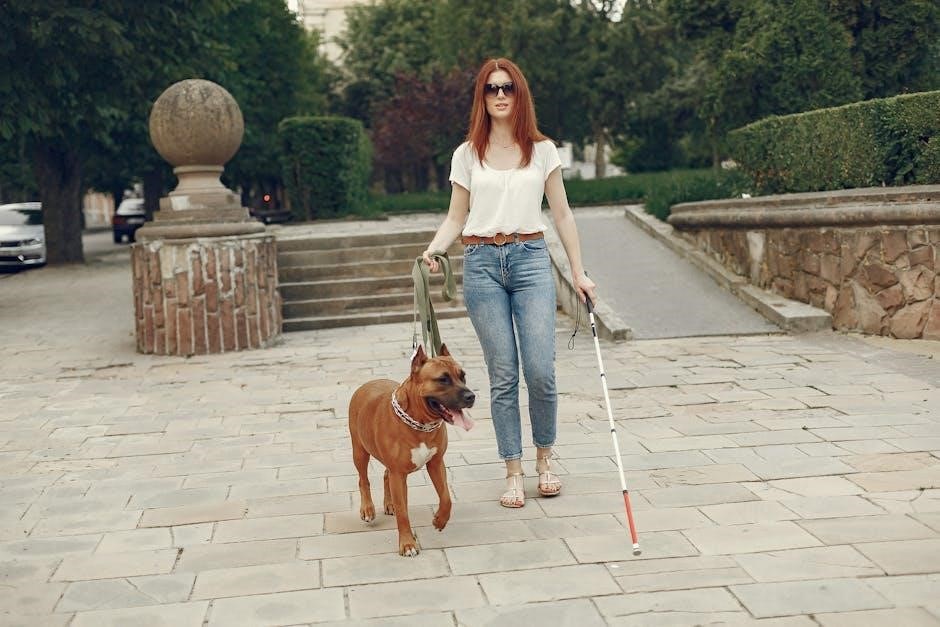
pedestrians using guide dogs or white canes must
Article Plan: Pedestrians Using Guide Dogs or White Canes – Rights and Safety
Recent lawsuits in D․C․ and Chicago highlight critical safety concerns for visually impaired pedestrians․ These cases emphasize the urgent need for accessible infrastructure and legal protections,
particularly regarding pedestrian signals and intersection safety․
Navigating urban environments presents unique and often significant challenges for pedestrians who rely on guide dogs or white canes․ These individuals face heightened vulnerability due to their dependence on auditory and tactile cues, making them particularly susceptible to accidents and injuries in spaces not designed with their needs in mind․ The increasing number of legal challenges, such as the recent class action lawsuit in D․C․, underscores a systemic failure to prioritize the safety of this population․
The core issue revolves around inaccessible pedestrian infrastructure․ Many intersections lack Accessible Pedestrian Signals (APS), leaving visually impaired individuals unable to independently determine safe crossing times․ This deficiency is compounded by hazards like distracted drivers, poorly maintained sidewalks, and the absence of clear auditory signals․ The tragic incident in Chicago, where an architect was struck by a taxi, serves as a stark reminder of the real-world consequences of these shortcomings․

Furthermore, awareness and understanding of the rights and needs of visually impaired pedestrians remain limited․ National White Cane Day aims to address this gap, but sustained education for both drivers and pedestrians is crucial․ Ensuring safe mobility for those using guide dogs or white canes isn’t merely a matter of legal compliance; it’s a fundamental aspect of creating inclusive and equitable communities․
Legal Framework: Protecting Pedestrians with Disabilities
The legal landscape surrounding the rights of pedestrians with disabilities, particularly those utilizing guide dogs or white canes, is rooted in several key pieces of legislation․ While a specific “White Cane Law” exists – historically significant and still relevant in North Carolina – broader protections stem from the Americans with Disabilities Act (ADA)․ The ADA mandates accessible public spaces and transportation, directly impacting pedestrian infrastructure․
Current legal battles, like the lawsuit against D․C․, demonstrate the ongoing struggle to enforce these rights․ Plaintiffs argue that the District’s failure to install and maintain APS at intersections violates the ADA, creating an unsafe environment․ Similar challenges are emerging nationwide, highlighting a gap between legal mandates and practical implementation․
Recent victories, such as Proskauer’s advocacy in Chicago, demonstrate the power of legal action in securing improved accessibility․ These cases establish precedents and compel municipalities to address deficiencies․ However, relying solely on litigation is insufficient․ Proactive legislation, coupled with robust enforcement mechanisms, is essential to guarantee the safety and independence of visually impaired pedestrians․ The legal framework must evolve to address emerging challenges and technological advancements․
The White Cane Law: Historical Context and Current Status
Originating decades ago, the White Cane Law initially aimed to establish the white cane as a symbol of a pedestrian’s visual impairment, granting them the right-of-way․ This legislation signaled a crucial shift in societal recognition of the challenges faced by the visually impaired․ While initially a general statute, its core principle – prioritizing the safety of pedestrians using mobility aids – remains foundational․
However, the White Cane Law’s current status varies significantly by jurisdiction․ While still acknowledged, it often functions as a supplementary measure alongside broader ADA protections․ The recent focus on Accessible Pedestrian Signals (APS) reflects a move beyond simply granting right-of-way to actively creating safer crossing environments․
National White Cane Day, observed annually on October 15th, serves as a vital reminder of the law’s legacy and the ongoing need for awareness․ Despite its historical importance, the White Cane Law alone is insufficient to address modern pedestrian safety concerns․ Legal battles in cities like D․C․ and Chicago demonstrate the necessity of comprehensive accessibility standards and proactive infrastructure improvements, extending beyond the symbolic recognition offered by the original law․
Accessible Pedestrian Signals (APS): A Critical Need
The increasing number of lawsuits, notably in D․C․, directly underscore the critical need for Accessible Pedestrian Signals (APS)․ These signals are no longer considered optional accommodations but essential components of safe pedestrian infrastructure for individuals using white canes or accompanied by guide dogs․ Traditional pedestrian signals rely heavily on visual cues, inherently excluding those with visual impairments․
APS provide crucial auditory and tactile information about crossing times and traffic flow․ This allows pedestrians to independently assess intersection safety, reducing reliance on assistance and enhancing their autonomy․ The absence of APS creates significant hazards, as demonstrated by incidents like the one in Chicago involving an architect struck by a taxicab․
The D․C․ lawsuit specifically targets the District’s failure to install and maintain these signals at most intersections, highlighting a systemic accessibility gap․ Simply acknowledging the White Cane Law isn’t enough; proactive implementation of APS is vital․ Investing in APS isn’t merely about legal compliance; it’s about ensuring equitable access and preventing avoidable accidents for a vulnerable population․
APS Functionality: Types and Features
Accessible Pedestrian Signals (APS) aren’t a monolithic solution; they encompass various technologies designed to convey crossing information to pedestrians using white canes or guide dogs․ The most common type utilizes audible tones – often a repeating “cuckoo” sound – indicating the “walk” interval․ However, simply adding sound isn’t sufficient; the location of the speaker is crucial for accurate localization․
Tactile APS, featuring vibrating surfaces, provide another crucial cue, particularly beneficial in noisy environments where auditory signals might be masked․ More advanced systems incorporate speech messages announcing street names and crossing directions, enhancing clarity and independence․ Push buttons equipped with tactile arrows and Braille further aid orientation․
Modern APS often integrate with smart city technologies, adjusting timing based on pedestrian volume and traffic conditions․ Remote monitoring and diagnostic capabilities ensure signals are functioning correctly, addressing concerns raised in the D․C․ lawsuit regarding maintenance․ Effective APS functionality demands careful consideration of the surrounding environment and the specific needs of visually impaired pedestrians, going beyond basic compliance․

Lawsuits and Legal Challenges: D․C․ Case Study
The recent federal lawsuit filed against the District of Columbia by the D․C․ Council of the Blind and five individual plaintiffs underscores systemic failures in pedestrian accessibility․ The core allegation centers on the District’s inadequate installation and maintenance of Accessible Pedestrian Signals (APS) at numerous intersections, creating hazardous conditions for blind pedestrians․
Plaintiffs argue that the lack of APS, or their malfunctioning state, violates the Americans with Disabilities Act (ADA), denying equal access to public rights-of-way․ The suit specifically highlights the dangers faced when crossing streets, emphasizing the increased risk of accidents and injuries․ This legal challenge isn’t isolated; it reflects a growing national trend of advocacy groups pursuing litigation to enforce pedestrian rights․
The D․C․ case draws attention to the critical need for proactive infrastructure improvements and consistent monitoring of existing APS․ It also raises questions about the District’s commitment to fulfilling its legal obligations to ensure safe and independent mobility for visually impaired residents․ The outcome of this lawsuit could set a precedent for similar cases nationwide․
Chicago Lawsuit: Proskauer’s Advocacy and Victory
Proskauer Rose LLP secured a significant victory on May 29, 2025, in a long-fought legal battle advocating for the rights of blind and visually impaired pedestrians in Chicago․ The case stemmed from the experiences of architect John Gleichman, legally blinded by retinal disease, who was struck by a taxicab at a dangerous intersection near Lincoln Park Zoo․

This wasn’t an isolated incident; it highlighted a broader pattern of inaccessible intersections lacking adequate pedestrian signals and safety measures․ Proskauer’s advocacy focused on compelling the City of Chicago to accelerate the implementation of accessible pedestrian infrastructure, ensuring safer crossings for all visually impaired individuals․
The firm’s successful litigation resulted in a court order mandating the city to prioritize upgrades to pedestrian signals and improve overall accessibility․ This victory demonstrates the power of legal action in driving positive change and holding municipalities accountable for ADA compliance․ It serves as a crucial precedent, reinforcing the rights of pedestrians using guide dogs or white canes to navigate urban environments safely and independently․
Intersection Safety: Common Hazards for Visually Impaired Pedestrians
Intersections present a multitude of dangers for pedestrians using guide dogs or white canes․ The lack of Accessible Pedestrian Signals (APS) is a primary concern, leaving individuals unable to determine safe crossing times․ Traditional audio signals often fail to pinpoint the direction of travel, creating confusion and risk․
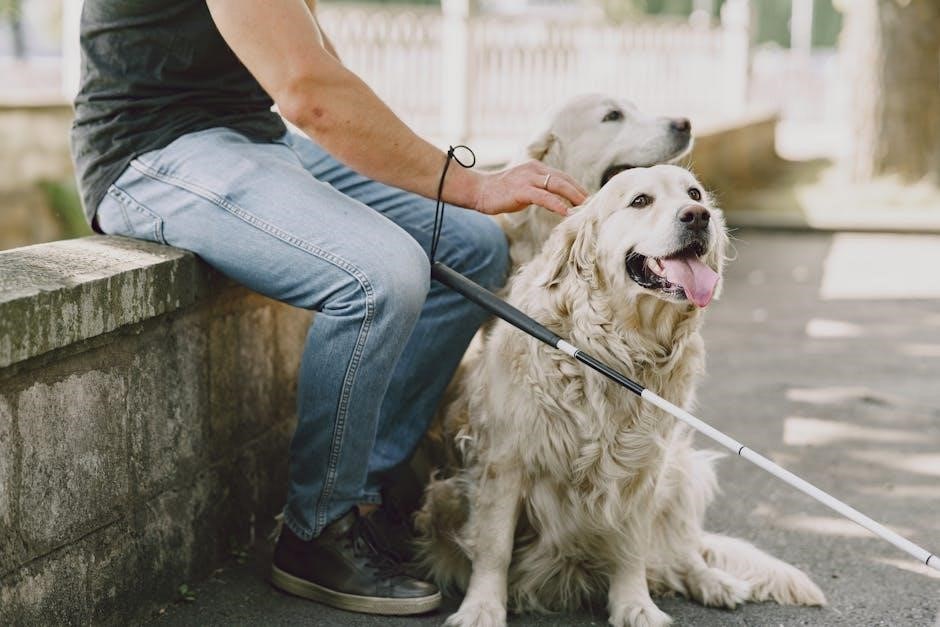
Beyond signal deficiencies, unpredictable traffic patterns, turning vehicles failing to yield, and obstructions on sidewalks – like construction or overgrown vegetation – significantly increase hazards․ Drivers’ inattention or disregard for pedestrian right-of-way further exacerbate these challenges․ The Chicago case involving architect John Gleichman tragically illustrates the consequences of these dangers․
Even with a guide dog, navigating complex intersections requires heightened awareness and reliance on auditory cues, which can be masked by urban noise․ Pedestrians must contend with erratic pedestrian flow and the potential for collisions with cyclists or scooters․ Addressing these hazards demands comprehensive infrastructure improvements and increased driver education to ensure safe passage․
The Role of Guide Dogs: Assistance and Legal Protections
Guide dogs provide invaluable assistance to visually impaired pedestrians, offering safe navigation through complex environments․ These highly trained animals alert their handlers to obstacles, changes in elevation, and approaching traffic, effectively extending the handler’s perception beyond their immediate surroundings․ However, reliance on a guide dog doesn’t eliminate all risks; intersections remain particularly hazardous due to unpredictable traffic and inadequate pedestrian signals․
Legally, guide dogs enjoy significant protections, granting access to public spaces and transportation where other animals are typically prohibited․ This right is rooted in the understanding that guide dogs are not pets, but essential tools enabling independent mobility․ Despite these protections, instances of access denial persist, highlighting the need for continued advocacy and education․
Pedestrians utilizing guide dogs must be confident in their dog’s training and abilities, while also remaining vigilant and aware of their surroundings․ The partnership between handler and dog is crucial for safe and effective navigation, especially when encountering challenging urban landscapes․
Guide Dog Access Rights: Public Spaces and Transportation
Federal law, and often state and local ordinances, firmly establishes the right of individuals with disabilities to be accompanied by their guide dogs in public spaces․ This encompasses a broad range of locations, including restaurants, stores, hotels, theaters, and government buildings․ Transportation is also covered, extending to buses, trains, airplanes, and taxis – effectively ensuring equal access to mobility for visually impaired individuals․
Despite legal protections, challenges to guide dog access still occur․ These can range from subtle forms of discrimination, such as questioning the legitimacy of the dog’s status, to outright denial of entry․ Such instances underscore the importance of educating business owners and the public about the legal rights of guide dog users․
Pedestrians utilizing guide dogs must be prepared to advocate for their rights when faced with unlawful access denials․ Knowing the relevant laws and having resources available, such as contact information for advocacy groups, can empower individuals to address discriminatory practices effectively․
White Cane Usage: Symbolism and Legal Recognition
The white cane is far more than a mobility aid; it’s a globally recognized symbol of blindness and visual impairment․ Its distinct color immediately signals to drivers and other pedestrians that the user requires extra caution and consideration․ Historically, the white cane emerged as a practical solution for safe independent travel, evolving from ad-hoc walking sticks to a standardized tool․
Legally, the “White Cane Law” – originating decades ago and still relevant today – mandates that drivers yield the right-of-way to pedestrians using a white cane or accompanied by a guide dog․ This law isn’t merely a courtesy; it’s a legal obligation designed to protect vulnerable pedestrians․ However, enforcement can be inconsistent, highlighting the need for ongoing driver education․
Pedestrians utilizing white canes must understand their legal rights and responsibilities, and actively employ the cane for its intended purpose – signaling their presence and navigating safely․ National White Cane Day serves as a crucial reminder of these rights and the challenges faced by visually impaired individuals․
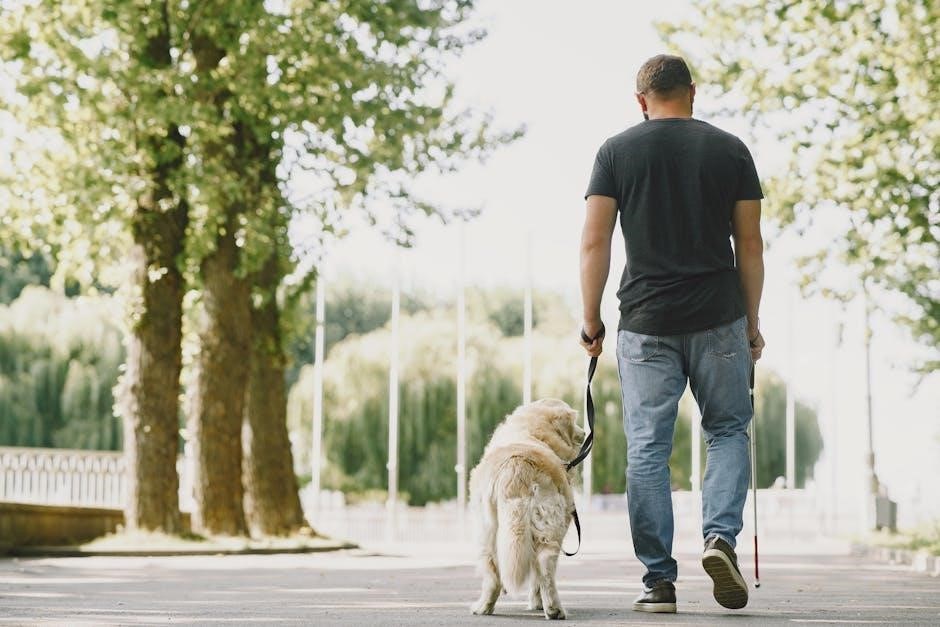
National White Cane Day: Raising Awareness
Observed annually on October 15th, National White Cane Day isn’t simply a commemorative event; it’s a vital opportunity to elevate public awareness regarding the challenges faced by blind and visually impaired individuals․ The day serves as a platform to advocate for accessibility, inclusion, and the rights of pedestrians utilizing white canes or guide dogs․
Events held on this day often include demonstrations of white cane skills, educational workshops for the public, and advocacy efforts aimed at improving pedestrian infrastructure․ These initiatives aim to foster empathy and understanding, encouraging drivers and pedestrians alike to be more mindful and respectful of those with visual impairments․
Pedestrians using guide dogs or white canes must actively participate in raising awareness, sharing their experiences, and educating others about the importance of accessible environments․ It’s a day to celebrate independence and highlight the ongoing need for legal protections and safer streets for all․ The goal is to move beyond awareness to tangible action and systemic change․
Driver Responsibilities: Legal Obligations to Visually Impaired Pedestrians
Drivers bear a significant legal and ethical responsibility to ensure the safety of all pedestrians, but this duty is heightened when encountering individuals using white canes or accompanied by guide dogs․ These aids signify a visual impairment, demanding increased caution and adherence to specific legal obligations․

Legally, drivers must yield the right-of-way to pedestrians with white canes or guide dogs at crosswalks, marked or unmarked․ Many jurisdictions have specific statutes – like the White Cane Law – reinforcing this obligation․ Beyond legal requirements, drivers should anticipate potential difficulties these pedestrians may face when navigating intersections and roadways․
Pedestrians using guide dogs or white canes must be given ample time to cross, and drivers should avoid any actions that could startle or endanger them․ This includes refraining from blocking crosswalks or making sudden movements․ Proactive awareness and respectful driving are paramount to preventing accidents and upholding the rights of visually impaired individuals․
Pedestrian Safety Education: For Drivers and Pedestrians
Comprehensive pedestrian safety education is crucial for fostering a more inclusive and secure environment for everyone, particularly those using white canes or accompanied by guide dogs․ Educational initiatives must target both drivers and pedestrians, emphasizing mutual respect and understanding of specific needs․
For drivers, education should focus on recognizing the symbolism of the white cane and the legal rights of individuals with guide dogs․ Training should highlight the importance of yielding the right-of-way, avoiding distractions, and understanding the challenges visually impaired pedestrians face when navigating traffic․ Simulated experiences can enhance empathy and awareness․
Pedestrians using guide dogs or white canes must also receive education on safe crossing techniques, assertive communication with drivers, and understanding their legal rights․ Resources should be available to help them advocate for accessible infrastructure and report safety concerns․ National White Cane Day serves as a vital platform for raising awareness and promoting safe practices․
Technological Advancements: Improving Pedestrian Safety
Emerging technologies offer promising solutions to enhance pedestrian safety, particularly for individuals utilizing white canes or guide dogs․ Accessible Pedestrian Signals (APS) represent a foundational advancement, providing audible and vibrotactile cues to indicate safe crossing times․ However, ongoing innovation is vital to address existing limitations and expand accessibility․

Smart city initiatives incorporating connected vehicle technology can alert drivers to the presence of pedestrians with visual impairments, even outside of traditional intersections․ Smartphone applications utilizing GPS and beacon technology can provide real-time navigation assistance and hazard warnings․ Research into haptic feedback systems integrated into white canes could offer enhanced environmental awareness․
Pedestrians using guide dogs or white canes must benefit from these advancements, but equitable access is paramount․ Technology should be affordable, user-friendly, and regularly maintained․ Furthermore, it’s crucial to avoid over-reliance on technology; fundamental infrastructure improvements and driver education remain essential components of a comprehensive safety strategy․
The Impact of Urban Design: Accessible Sidewalks and Crosswalks
Urban design profoundly impacts the safety and independence of pedestrians, especially those relying on white canes or guide dogs․ Accessible sidewalks are fundamental, requiring consistent surfaces free of obstructions like protruding objects, uneven paving, or temporary construction․ Detectable warning surfaces at curb ramps are crucial, alerting cane users to street crossings․
Crosswalks must incorporate features like extended crossing times, audible signals, and tactile paving to ensure safe navigation․ The absence of these elements, as highlighted in recent D․C․ lawsuits, creates significant hazards․ Street furniture placement should prioritize clear pathways, avoiding obstructions that force pedestrians into roadways․
Pedestrians using guide dogs or white canes must navigate environments designed with their needs in mind․ This includes well-maintained infrastructure, logical street layouts, and consistent design standards․ Prioritizing pedestrian safety in urban planning isn’t merely a matter of compliance; it’s a commitment to inclusivity and equitable access for all citizens․
Case Studies: Accidents Involving Visually Impaired Pedestrians (Chicago Example)
The case of architect John Gleichman in Chicago vividly illustrates the dangers faced by visually impaired pedestrians․ Struck by a taxicab near Lincoln Park Zoo, Gleichman’s accident underscores the critical need for improved intersection safety․ He was legally blind due to retinal disease, highlighting the vulnerability of this population․
Pedestrians using guide dogs or white canes must rely on predictable environments and attentive drivers․ This incident, occurring at a previously hazardous intersection, prompted legal action and advocacy for better pedestrian signals․ The lack of adequate safety measures contributed directly to the accident, emphasizing the importance of accessible infrastructure․

Such case studies demonstrate that simply having crosswalks isn’t enough; they must be accessible crosswalks․ Proskauer’s subsequent legal victory in Chicago demonstrates a commitment to securing rights for visually impaired pedestrians․ These incidents serve as stark reminders of the potential consequences when urban design fails to prioritize the safety of all citizens, particularly those with disabilities․
Advocacy Groups: Resources and Support for the Visually Impaired
Organizations like the D․C․ Council of the Blind are pivotal in advocating for the rights and safety of visually impaired pedestrians․ Their recent lawsuit against the District of Columbia, concerning inaccessible pedestrian signals, exemplifies their commitment to legal action and systemic change․ These groups tirelessly work to ensure pedestrians using guide dogs or white canes must navigate streets safely․
National White Cane Day, observed annually on October 15th, serves as a crucial awareness campaign, highlighting the challenges faced by the visually impaired․ Advocacy groups utilize this day to educate the public and lobby for improved infrastructure and legislation․ They provide vital resources, including training on white cane usage and guide dog handling․
Furthermore, these organizations offer support networks for individuals and families affected by vision loss․ They champion accessible urban design, pushing for features like Accessible Pedestrian Signals (APS) and audible crosswalks․ Their efforts are essential in fostering a more inclusive and safe pedestrian environment for all, demanding accountability from municipalities․
Future Directions: Towards More Inclusive Pedestrian Infrastructure
Moving forward, a comprehensive overhaul of pedestrian infrastructure is crucial to ensure the safety of all, especially pedestrians using guide dogs or white canes․ This necessitates a shift towards universal design principles, integrating accessibility from the initial planning stages of urban development․ Prioritizing Accessible Pedestrian Signals (APS) at all intersections, not just some, is paramount, alongside consistent maintenance to guarantee functionality․
Technological advancements offer promising solutions, including smart crosswalks that dynamically adjust timing based on pedestrian needs and real-time audio cues delivered via smartphone apps․ Urban design must focus on creating predictable and obstacle-free sidewalks, eliminating hazards like protruding objects and uneven surfaces․
Furthermore, enhanced driver education programs are vital, emphasizing legal obligations to yield to pedestrians with visual impairments․ Proactive legislation, building upon the White Cane Law, should mandate accessibility standards and provide funding for infrastructure improvements․ Ultimately, a collaborative effort between policymakers, urban planners, and advocacy groups is essential to create truly inclusive pedestrian environments․