electrolux dishwasher user manual
Welcome! This manual unlocks your Electrolux dishwasher’s potential, detailing features, applications, and troubleshooting for optimal performance and lasting satisfaction․
Carefully review these instructions before installation and use, ensuring safe operation and maximizing your appliance’s benefits – always keep this manual handy!
Welcome and Important Safety Information
Welcome to the Electrolux family! We’re thrilled you’ve chosen our dishwasher․ Before operating, please prioritize safety․ This appliance is designed for household use only; commercial applications are not supported․
Crucially, read all operating instructions thoroughly to achieve peak performance․ The manufacturer assumes no liability for operations deviating from this manual’s guidance․ Dishwasher detergents are dangerous – strictly adhere to packaging safety instructions․
Never allow children to operate or play near the dishwasher․ Avoid drinking or playing with water inside the appliance․ Ensure proper installation and electrical grounding to prevent hazards․ Always disconnect power before maintenance or cleaning․ Foreign objects like glass or plastic can cause damage – remove them before washing․
Understanding the Manual’s Purpose
This Electrolux dishwasher manual serves as your comprehensive guide to unlocking the full potential of your appliance․ It details everything from initial setup and daily operation to maintenance and troubleshooting․ Understanding its contents ensures optimal performance, extends the dishwasher’s lifespan, and guarantees safe usage․
Within these pages, you’ll find clear instructions on loading techniques, detergent usage, program selection, and special function activation․ We’ve also included vital safety information and guidance on addressing common issues, including error code explanations․
Keep this manual readily accessible for future reference․ It’s designed to empower you with the knowledge needed to confidently operate and maintain your Electrolux dishwasher․

Getting Started
Begin your Electrolux experience with careful unpacking, proper installation, and secure water/electrical connections – ensuring optimal performance from the start!
Unpacking and Installation
Carefully unpack your new Electrolux dishwasher, inspecting for any shipping damage before proceeding․ Remove all packaging materials, including protective films and cardboard supports․ Ensure you have all necessary components, referencing the included parts list․
Position the dishwasher in its designated space, ensuring adequate ventilation and access for maintenance․ Level the appliance using the adjustable feet to guarantee stable operation and prevent rattling during cycles․
Follow the detailed installation instructions provided separately, paying close attention to securing the dishwasher to adjacent cabinetry to prevent movement․ Improper installation can affect performance and void the warranty, so proceed with caution and precision․
Connecting Water and Electricity
Before connecting, ensure the water supply is turned off and the electrical circuit is de-energized․ Connect the water inlet hose to both the dishwasher and the water supply tap, ensuring a tight, leak-proof connection․ Use new hoses for optimal performance and to prevent future issues․
The dishwasher requires a grounded electrical connection․ Verify the voltage and frequency match the appliance’s specifications․ Do not use extension cords or adapters․
Once connected, slowly turn on the water supply and check for leaks․ Then, restore power and test the dishwasher to confirm proper operation․ If any issues arise, immediately disconnect both water and electricity and consult a qualified technician․
Loading the Dishwasher Correctly
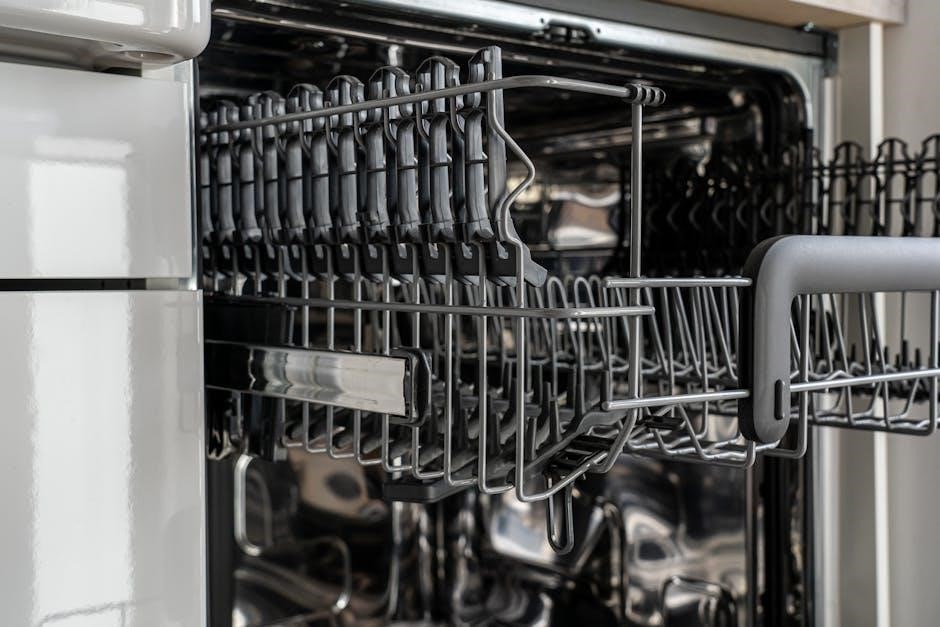
Proper loading maximizes cleaning efficiency and prevents damage to your dishes․ Avoid overcrowding; items need space for water circulation․ Remove large food particles before loading․ Position items so spray arms can reach all surfaces – don’t block them!
Fragile items like glasses should be placed securely in the upper rack․ Ensure tall glasses don’t obstruct the lower spray arm․ Pots, pans, and heavily soiled dishes belong in the lower rack, facing the center․
Avoid placing plastics directly over heating elements․ Check that nothing protrudes through the bottom of the racks․ Incorrect loading can lead to poor cleaning results․
Upper Rack Loading Guidelines
The upper rack is ideal for delicate items like glasses, cups, and small plates․ Securely position these to prevent movement during the wash cycle․ Ensure tall glasses don’t obstruct the lower spray arm’s rotation – adjust rack height if needed․
Place items upside down for optimal cleaning and drainage․ Avoid overcrowding; allow water to reach all surfaces․ Plastic items should be loaded away from the heating element to prevent melting or warping․
Smaller items can be placed between larger ones, maximizing space․ Check for any obstructions before starting the dishwasher․
Lower Rack Loading Guidelines
The lower rack is designed for larger, heavier items like pots, pans, and dinner plates․ Face soiled surfaces towards the center for effective cleaning․ Securely load these items to prevent them from shifting during the wash cycle․
Ensure large items don’t block the spray arms․ Utilize the foldable rack tines to accommodate various sizes and shapes․ Avoid placing delicate glassware on the lower rack due to potential water pressure․
Proper spacing is crucial; don’t overcrowd the rack․ Check that nothing obstructs the detergent dispenser or the base of the dishwasher․
Detergent and Rinse Aid
Detergent is essential for cleaning, while rinse aid enhances drying and prevents water spots․ Always use dishwasher-specific detergents; hand soap creates excessive suds․ Powder, gel, or tablet forms are acceptable, but follow dosage instructions carefully․
Rinse aid lowers surface tension, allowing water to sheet off dishes․ This improves drying, especially with plastic items․ Regularly check and refill the rinse aid dispenser for optimal results․
Caution: Dishwasher detergents can be dangerous․ Adhere to safety guidelines on the packaging and keep them out of reach of children․
Types of Detergent to Use
Electrolux dishwashers are compatible with various detergent types, including powder, gel, and tablets․ Powder detergents are economical but may leave residue if not fully dissolved․ Gel detergents dissolve easily but can be less effective on heavily soiled dishes․
Tablets offer convenience with pre-measured doses, often containing rinse aid and salt․ However, ensure the tablet fully dissolves during the wash cycle․ Avoid using hand dish soap, as it creates excessive suds, potentially damaging the appliance․
Always select a detergent formulated specifically for automatic dishwashers to ensure optimal cleaning performance and protect your Electrolux dishwasher․
Filling the Detergent Dispenser
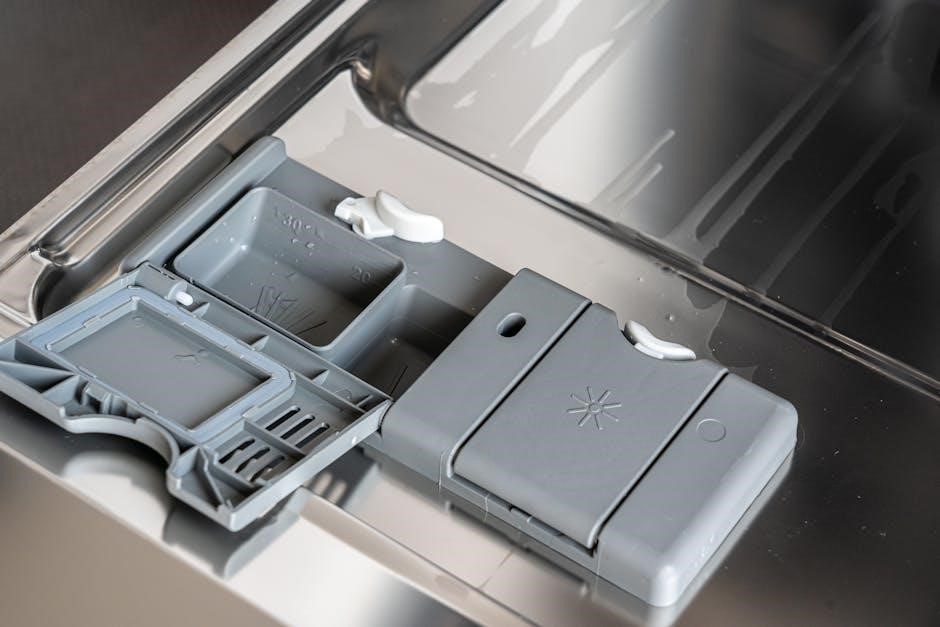
Locate the detergent dispenser, typically found inside the dishwasher door․ Open the dispenser lid․ For powder or gel detergents, fill the main compartment up to the indicated maximum level, guided by the detergent manufacturer’s instructions and the wash cycle selected․
If using a tablet, place it directly into the main compartment․ Ensure the tablet doesn’t block the dispenser arm; Close the dispenser lid securely until it clicks․
Avoid overfilling, as this can hinder proper detergent distribution․ Always add detergent just before starting the wash cycle to prevent clumping or pre-dissolving․
Rinse Aid – Importance and Filling
Rinse aid significantly improves drying performance and prevents water spots on dishes․ Locate the rinse aid dispenser, usually near the detergent compartment․ Open the dispenser cap and carefully fill it with rinse aid until the indicator level is reached – avoid overfilling․
Adjust the rinse aid dosage using the adjustment dial, typically numbered 1-6․ Start with a mid-range setting (e․g․, 3 or 4) and adjust based on your water hardness and desired results․
Regularly check the rinse aid level and refill as needed to maintain optimal drying and sparkling clean dishes․
Operating Your Dishwasher
Explore the control panel to select wash programs and special functions, ensuring optimal cleaning for various dish types and soil levels – enjoy effortless operation!
Control Panel Overview
The control panel is your command center for operating the Electrolux dishwasher․ It features clearly labeled buttons and indicators for selecting wash programs, adjusting settings, and monitoring the cycle’s progress․ Familiarize yourself with the power button, program selection dial, and option buttons like Delay Start and Extra Hygiene․
The display panel provides information on the selected program, remaining time, and any error messages․ Understanding these indicators is crucial for efficient operation․ Buttons may include options for temperature adjustment, intensity levels, and additional features․ Refer to the program descriptions within this manual to choose the most appropriate cycle for your load․ A quick glance at the panel keeps you informed throughout the wash․
Selecting Wash Programs
Your Electrolux dishwasher offers a variety of wash programs tailored to different cleaning needs․ Choosing the right program ensures optimal results and efficient water and energy usage․ Common programs include Eco, Intensive, Normal, and Quick Wash․ The Eco program is designed for lightly soiled dishes, minimizing energy consumption․
Intensive tackles heavily soiled pots and pans, while Normal is suitable for everyday loads․ Quick Wash provides a fast cycle for lightly soiled items․ Consult the program guide within this manual for detailed descriptions, recommended load types, and estimated cycle durations․ Selecting the appropriate program is key to sparkling clean dishes!
Eco Program Details
The Eco program on your Electrolux dishwasher is engineered for environmentally conscious cleaning․ It utilizes lower water temperatures and extended wash cycles to minimize energy and water consumption, making it ideal for lightly soiled dishes․ This program prioritizes resource efficiency without compromising cleaning performance․
Expect a longer cycle duration compared to more intensive programs․ It’s perfect for daily use with standard dishware․ While effective, avoid using the Eco program for heavily soiled items or pots and pans, as pre-rinsing may be necessary․ Refer to the program chart for specific details and load recommendations․
Intensive Program Details
The Intensive program is designed for tackling heavily soiled dishes, cookware, and stubborn food residues․ It employs higher water temperatures, increased water pressure, and a prolonged wash cycle to ensure thorough cleaning․ This program is best suited for pots, pans, and dishes with baked-on or dried-on food․
Expect a longer cycle duration and increased energy consumption compared to other programs․ Proper loading is crucial; ensure items don’t obstruct the spray arms․ While effective, it’s not necessary for lightly soiled items․ Always use a high-quality detergent for optimal results with the Intensive program․
Normal Program Details
The Normal program is your everyday workhorse, ideal for routinely soiled dishes and glassware․ It balances cleaning performance with energy and water efficiency, making it a sustainable choice for daily use․ This program utilizes moderate water temperatures and spray pressure to effectively remove food particles and grease․
It’s suitable for a mixed load of dishes, including plates, bowls, cups, and lightly soiled cookware․ While effective, heavily soiled items may require pre-rinsing or the Intensive program․ Using the correct amount of detergent is key for optimal cleaning results with the Normal program․
Quick Wash Program Details
The Quick Wash program is designed for lightly soiled dishes that require a fast cleaning cycle․ It’s perfect when you need dishes done in a hurry, offering a significantly reduced wash time compared to standard programs․ However, remember that this speed comes with a trade-off in cleaning intensity․
This program uses lower water temperatures and a shorter wash duration, making it less effective on heavily soiled items or baked-on food․ It’s best suited for recently used dishes without stubborn residue․ Always use appropriate detergent for optimal results, and avoid overloading the dishwasher when utilizing the Quick Wash program․
Using Special Functions
Your Electrolux dishwasher offers several special functions to customize wash cycles․ The Delay Start function allows you to set a delayed start time, convenient for running the dishwasher during off-peak hours or when you’re away․ Simply select the desired delay duration using the control panel․
The Extra Hygiene option increases the water temperature during the final rinse, providing enhanced sanitation for baby bottles, cutting boards, or items requiring a higher level of cleanliness․ This function is ideal for households with young children or individuals with sensitivities․ Refer to the control panel for activation instructions․
Delay Start Function
The Delay Start function provides flexibility in scheduling wash cycles․ This feature allows you to postpone the start of a wash for a specified period, typically ranging from 30 minutes up to 24 hours․ Utilizing this function can take advantage of lower electricity rates during off-peak times, saving energy and money․
To activate Delay Start, select your desired wash program, then press the Delay Start button repeatedly until the desired delay time is displayed on the control panel․ The dishwasher will automatically begin the cycle after the set delay has elapsed․ Ensure the door is securely latched after setting the delay․
Extra Hygiene Option
The Extra Hygiene option elevates cleaning performance, ideal for households with babies, allergy sufferers, or those prioritizing thorough sanitation․ This function increases the wash temperature to eliminate more bacteria and germs, ensuring dishes are exceptionally clean and hygienic․
Activate the Extra Hygiene setting by selecting it on the control panel before starting a wash cycle․ It’s often indicated by a specific symbol – typically a droplet or a hygiene icon․ This option extends the wash duration and uses more energy, but delivers superior cleanliness for items requiring intense sanitization․
Starting and Monitoring a Wash Cycle
Once the desired wash program and any special functions are selected, press the ‘Start’ button to initiate the cycle․ The dishwasher will automatically proceed through the washing phases – pre-wash, wash, rinse, and drying․
During operation, the display panel shows the remaining cycle time․ Avoid opening the door mid-cycle, as this can affect performance and potentially cause water leakage․ A signal will sound upon completion․ Carefully open the door, as steam may escape․ Allow dishes to cool before unloading for optimal results and to prevent burns․
Maintenance and Cleaning
Regular upkeep ensures peak performance! Clean filters, spray arms, and descale periodically to maintain hygiene and prevent issues – follow manual guidelines․
Cleaning the Filters
Maintaining clean filters is crucial for optimal dishwasher performance․ Food particles and debris can accumulate, hindering water circulation and reducing cleaning effectiveness․ Your Electrolux dishwasher features a filter system designed to trap these particles, preventing them from being redistributed onto your dishes․
Regularly inspect and clean the filters – typically located at the bottom of the dishwasher’s interior․ Remove the lower rack to access them․ Twist and lift to unlock, then rinse thoroughly under running water, using a soft brush to remove stubborn residue․ Ensure proper reinstallation, locking them securely into place․ Consult your user manual for specific filter locations and cleaning frequencies recommended for your model․
Neglecting filter cleaning can lead to poor washing results, unpleasant odors, and potential damage to the dishwasher․
Cleaning the Spray Arms
Spray arms distribute water throughout the dishwasher, ensuring thorough cleaning․ Over time, food particles and mineral deposits can clog the spray arm nozzles, reducing water pressure and cleaning efficiency․ Regularly inspect and clean the spray arms for optimal performance․
To clean, detach the spray arms – usually by unscrewing or unclipping them․ Use a toothpick or fine wire to clear any blocked nozzles․ Rinse the arms thoroughly under running water to remove dislodged debris․ Ensure the spray arms rotate freely after cleaning․ Reattach them securely, verifying proper alignment․
Consistent spray arm maintenance guarantees effective dishwashing and prevents potential issues․ Refer to your user manual for specific instructions related to your model’s spray arm design․
Descaling the Dishwasher
Descaling removes limescale buildup inside your Electrolux dishwasher, maintaining optimal performance and extending its lifespan․ Hard water areas necessitate more frequent descaling – typically every 6-12 months․ Ignoring limescale can lead to reduced heating efficiency and potential damage;
Use a commercially available dishwasher descaler, following the product’s instructions carefully․ Alternatively, you can use citric acid․ Run an empty dishwasher cycle with the descaler or citric acid in the detergent dispenser․ Select a high-temperature program for best results․
After descaling, run an additional rinse cycle to remove any residual descaling agent․ Consult your user manual for specific descaling recommendations for your model․
Exterior Cleaning Instructions
Maintaining a clean exterior enhances your Electrolux dishwasher’s appearance and prevents buildup․ Regularly wipe down the exterior surfaces with a damp, soft cloth․ For stainless steel models, use a stainless steel cleaner to avoid streaks and maintain shine․
Avoid abrasive cleaners, scouring pads, or harsh chemicals, as these can damage the finish․ Mild dish soap diluted in water is generally safe for most exterior surfaces․ Pay attention to the control panel, ensuring no moisture enters the buttons or display․
Dry the exterior thoroughly after cleaning to prevent water spots․ Consistent cleaning preserves the appliance’s aesthetic appeal and longevity․
Troubleshooting Common Issues
Resolve problems quickly! This section guides you through solutions for issues like starting failures, poor cleaning, leaks, and deciphering error codes․
Dishwasher Not Starting
If your Electrolux dishwasher fails to start, several factors could be at play․ First, verify the power supply – ensure the dishwasher is properly plugged into a functioning outlet and that the circuit breaker hasn’t tripped․
Next, check the door latch; it must be securely closed for the dishwasher to initiate a cycle․ A partially open or improperly latched door will prevent operation․ Also, examine the control panel for any locked or inactive settings․
Confirm that the ‘Delay Start’ function isn’t activated unintentionally, as this will postpone the cycle․ If these checks don’t resolve the issue, consult the error code display (if applicable) for specific diagnostic information, or contact a qualified technician for assistance․
Poor Washing Results
Experiencing unsatisfactory cleaning performance? Several issues could contribute to poor washing results with your Electrolux dishwasher․ Begin by verifying correct loading practices – avoid overcrowding and ensure spray arms aren’t obstructed by dishes․
Insufficient detergent or using an inappropriate type can also hinder cleaning effectiveness․ Confirm you’re using a dishwasher-specific detergent and the dispenser is filled correctly․ Additionally, check the spray arms for clogs and clean them thoroughly․
Low water temperature can impact cleaning; ensure your hot water heater is set to the recommended temperature․ Finally, a buildup of limescale may reduce performance – consider descaling your dishwasher regularly․
Water Leaks
Discovering water leaks from your Electrolux dishwasher requires immediate attention․ First, inspect the door seal for damage or debris, ensuring a tight closure․ Check the water inlet and drain hoses for cracks or loose connections – tighten as needed․
Verify the dishwasher is level; an uneven appliance can cause leaks․ Examine the spray arms and filter housing for proper seating and sealing․ If leaks persist, inspect the pump and motor area for any signs of damage or corrosion․
Caution: Disconnect power before investigating internal components․ If you’re unable to identify the source, contact a qualified technician․
Error Codes and Their Meanings
Electrolux dishwashers utilize error codes to diagnose issues․ A flashing code on the control panel indicates a problem requiring attention․ Common codes include I20 (water inlet issue), I30 (drainage problem), E11 (heating element fault), and E22 (sensor malfunction)․
Consult your specific model’s manual for a complete list and detailed explanations․ Often, simple solutions like resetting the dishwasher or checking the water supply can resolve minor errors․
Important: If an error code persists after troubleshooting, or if you are unsure how to proceed, contact Electrolux customer support or a qualified technician for assistance․
Technical Specifications
Discover key details! This section outlines your Electrolux dishwasher’s energy and water consumption, alongside precise dimensions and weight for installation planning․
Energy Consumption Details
Understanding energy usage is crucial for efficiency and cost savings․ Your Electrolux dishwasher is designed with energy conservation in mind, but actual consumption varies based on selected wash programs and additional functions․
Typically, the Eco program demonstrates the lowest energy usage, often consuming around 0;6 ‒ 0․8 kWh per cycle․ The Intensive program, designed for heavily soiled dishes, will naturally require more energy, potentially reaching 1․5 ⏤ 2․0 kWh․ Normal programs generally fall in between, around 0․9 ‒ 1․2 kWh․
Remember that using features like Extra Hygiene or a Delay Start can slightly increase energy consumption․ Refer to the program descriptions within this manual for specific energy details for each cycle․ Always check the energy label affixed to your appliance for standardized testing results․
Water Consumption Details
Efficient water usage is a key feature of your Electrolux dishwasher․ Water consumption varies significantly depending on the chosen wash program and any selected options․ The Eco program is engineered for minimal water use, typically consuming between 9 to 11 liters per cycle․
The Intensive program, tackling heavily soiled items, requires more water – approximately 14 to 17 liters․ Normal programs generally use around 12 to 14 liters․ Utilizing features like Extra Hygiene might slightly increase water consumption․
For precise water usage figures, consult the program descriptions in this manual․ Always ensure proper loading to optimize water efficiency․ Check the appliance’s energy label for standardized water consumption data․
Dimensions and Weight
Understanding the physical specifications of your Electrolux dishwasher is crucial for proper installation and placement within your kitchen․ The standard 60cm model typically measures approximately 84․5cm in height, 60cm in width, and 60cm in depth․ However, these dimensions can vary slightly depending on the specific model․
Always refer to the detailed specifications listed on the appliance’s product label or in the technical data section of this manual for precise measurements․ The weight of the dishwasher, without packaging, generally ranges between 45 to 55 kilograms․
Ensure sufficient space around the appliance for ventilation and plumbing connections․ Consider these dimensions when planning your kitchen layout․